The Synergy of AI and Digitization: Transforming the Future
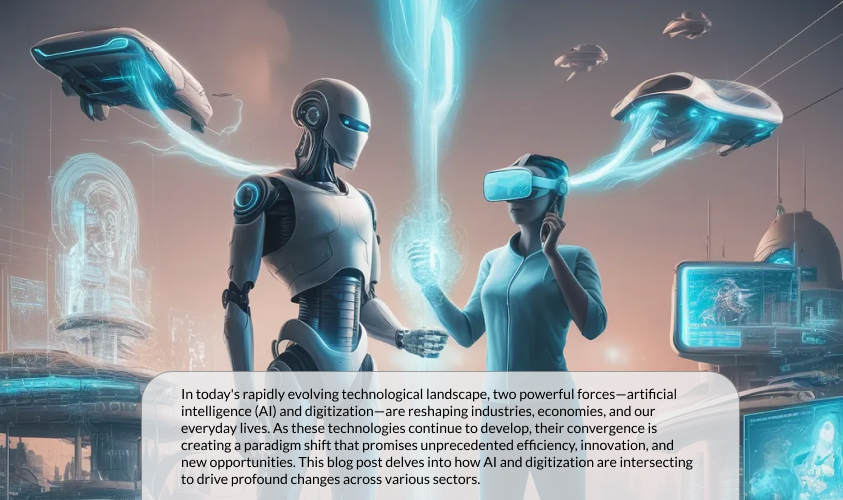
In today's rapidly evolving technological landscape, two powerful forces—artificial intelligence (AI) and digitization—are reshaping industries, economies, and our everyday lives. As these technologies continue to develop, their convergence is creating a paradigm shift that promises unprecedented efficiency, innovation, and new opportunities. This blog post delves into how AI and digitization are intersecting to drive profound changes across various sectors.
Understanding AI and Digitization
Artificial Intelligence (AI): AI refers to the simulation of human intelligence in machines programmed to think and learn like humans. This technology encompasses machine learning, natural language processing, computer vision, and robotics, enabling machines to perform tasks that traditionally required human intelligence.
Digitization: Digitization is the process of converting analog information into digital formats. This transformation allows for easier storage, retrieval, and manipulation of data, leading to more efficient operations and the creation of new digital products and services.
The Intersection of AI and Digitization
The intersection of AI and digitization is creating a new digital ecosystem where data-driven insights and intelligent automation are becoming the norm. Here are some key areas where this synergy is making a significant impact:
- Enhanced Data Analysis and Decision Making
Digitization generates vast amounts of data from various sources, including social media, IoT devices, and transactional records. AI algorithms can analyze this data to uncover patterns, trends, and insights that were previously hidden. Businesses can use these insights to make more informed decisions, optimize operations, and predict future trends.
- Automation of Routine Tasks
AI-powered automation is revolutionizing how businesses operate. By digitizing processes and applying AI, companies can automate repetitive tasks, reduce human error, and free up employees to focus on more strategic activities. For instance, in manufacturing, AI-driven robots can handle assembly lines, while in finance, AI can automate routine accounting tasks.
- Personalized Customer Experiences
AI and digitization are enabling businesses to deliver highly personalized customer experiences. Through the analysis of digitized customer data, AI can provide tailored recommendations, predict customer needs, and enhance customer service. E-commerce platforms, for example, use AI to recommend products based on past purchases and browsing history.
- Smart Cities and Infrastructure
The concept of smart cities is becoming a reality with the integration of AI and digitization. AI can analyze data from digitized infrastructure—such as traffic cameras, sensors, and public transport systems—to optimize city operations. This leads to improved traffic management, energy efficiency, and public safety.
- Healthcare Innovations
In healthcare, the combination of AI and digitization is driving significant advancements. Digitized medical records and imaging data can be analyzed by AI algorithms to assist in diagnosis, predict disease outbreaks, and personalize treatment plans. Telemedicine and AI-powered diagnostic tools are making healthcare more accessible and efficient.
- Enhanced Security and Fraud Detection
AI and digitization are strengthening security measures across various sectors. AI can analyze digitized data to detect anomalies and patterns indicative of fraud or cyber threats. Financial institutions, for instance, use AI to monitor transactions in real-time and identify suspicious activities.
Challenges and Considerations
While the synergy of AI and digitization offers immense potential, it also presents challenges:
- Data Privacy and Security: The digitization of sensitive information raises concerns about data privacy and security. Ensuring robust cybersecurity measures and compliance with regulations is crucial.
- Ethical Implications: The use of AI in decision-making processes can lead to ethical dilemmas, such as bias in algorithms and the impact on employment. Developing fair and transparent AI systems is essential.
- Infrastructure and Skills: Implementing AI and digitization requires significant investment in infrastructure and the development of a skilled workforce. Bridging the digital divide is necessary to ensure equitable access to these technologies.
Conclusion
The fusion of AI and digitization is transforming the way we live and work, creating a smarter, more connected world. As we continue to navigate this digital revolution, it is essential to address the accompanying challenges while harnessing the potential of these technologies to drive innovation and improve quality of life. The future belongs to those who can adeptly combine AI and digitization to create intelligent, data-driven solutions that benefit society as a whole.
In embracing this future, we not only unlock new efficiencies and opportunities but also pave the way for a more dynamic and resilient digital economy. The journey has just begun, and the possibilities are boundless.